Port equipment comprises specialized machines for handling, stacking and moving containers at seaports and terminals. We offer reach stackers, tractors and handlers from leading global manufacturers with a factory warranty and full service support.
When selecting port equipment, pay attention to the lifting capacity and stacking height.
All equipment presented in this section meets world quality standards and is supplied with a warranty, professional service and a supported spare parts warehouse.
We are always ready to provide advice and help with equipment selection. Contact us for more information.
Types of port equipment
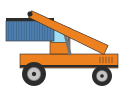
- Reach stackers — a self-propelled machine with a telescopic boom for stacking loaded containers at a terminal.
When choosing a reach stacker model, pay attention to the lifting capacity and stacking height. - Terminal tractors — a maneuverable tractor for moving semi-trailers and container chassis within the terminal area.
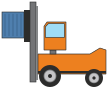
When choosing a terminal tractor model, pay attention to the tractive effort and turning radius. - Empty container handlers — a machine with an extended reach for stacking empty containers in several tiers.
When choosing an empty container handler model, pay attention to the lifting capacity and stacking height. - Hybrid reach stackers — a container stacker with a combined power unit for reduced fuel consumption and emissions.
When choosing a hybrid reach stacker model, pay attention to the lifting capacity and stacking height. - Ship-to-Shore Container Cranes — a port crane for loading and unloading containers onto and from a vessel.
When choosing a ship-to-shore container crane model, pay attention to the capacity under the spreader, boom outreach and lifting height. - Container Gantry Cranes — a gantry crane for stacking containers at a terminal, rail-mounted or rubber-tyred.
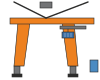
When choosing a container gantry crane model, pay attention to the lifting capacity, span and stack width. - Portal Cranes — a slewing crane on a portal for handling piece, bulk and heavy cargo in a port.
When choosing a portal crane model, pay attention to the lifting capacity and jib outreach.